
 |
| Outside the lines... |
The ways of the world
When was it that we were taught to color inside the
lines? Probably around kindergarten or
first grade, depending on our family or school culture. I’m sure this was based with an eye to the
future, hoping to instill craftsmanship early on in the psyche of future
workers and leaders.
We often claim to admire perfection – in art, beauty,
landscaping, possessions, achievements. My
Word program gives synonyms for perfection as excellence, faultlessness,
precision and rightness, words colored with a flavor of craftsmanship and some perhaps
with a sense of judgment.
Maybe we aspire to perfection in our careers, outward
appearances, education, manners, social circles. Sometimes perfection is sought in religious
or community standing, or through the collection of certificates or degrees. It’s especially sought in artistic activities
and admired (let’s not go into post-modern stuff here and the ways it breaks apart
past culture!).
I agree that there is a breathtaking rightness in the cetain
things: a curve, a glow of light, vibrant color, touchable textures, a striking
arrangement of shapes and form. These
parts make up a whole that has meaning for us in some way.
These are the things that light up our lives. Why?
The crack
“Ring
the bells that still can ring
Forget
your perfect offering
There
is a crack, a crack in everything
That’s
how the light gets in.”
~ Leonard Cohen
Imperfection in itself is not the goal; there are too many
adverse examples of it floating around our world. But there is a type of imperfection that
glows and transforms when we crack the perfect shell it lurks behind.
It is a mystery and often elusive. We have trouble defining it, but we recognize
it when we stub our toe on it. The recognition is a form of knowing deep
within our soul and psyche: sometimes a subtle glimpse, sometimes a breathtaking
flash. Sometimes it takes a very hard
knock before the light comes cascading in.
The ways of artists
And what does this have to do with art and nature?
While craftsmanship and technical skill are valuable traits
to develop, another form of art has been slowly gaining its own.
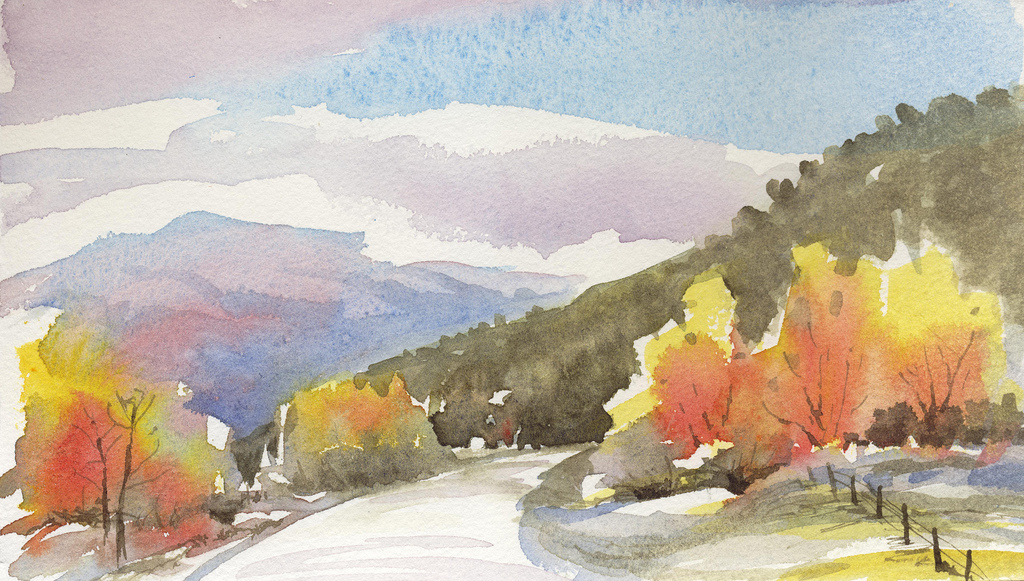 |
| The light in the trees: Beartooth Mountain. |
Plein air
sketching and painting, art journalists, nature
sketchers, and urban sketchers have a
profound digital presence on the Internet and run the range from definitive art
to “crafty” expressions of art. More and
more I find myself responding to “the hand of the artist.”
I prefer a quick sketch that captures multitudes to a
perfectly formed and rendered artwork. These
are the marks left that tell us about the artist’s interaction with their media:
the “artist’s authorship.” A brush
stroke, a water bloom, a drip, a smear.
Often imperfect to those technically inclined, they tell a human story
that we respond to.
Sometimes they create a space for something meaningful to
emerge.
 |
| The grace of imperfection. |
If you are an artist (in any media), open to your internal
story by embracing the unexpected: the ink blot, the unexpected raindrops, the
brush that skips. Watercolorists have
learned to call these happy
accidents. Explore the
Japanese concept of Wabi-sabi, what writer Taro Gold calls the “wisdom
of imperfection.”
Artists create art. It
is that simple. Let that be your goal,
rather than the perfect brush stroke, the flawless graded wash. Tell your story and let the paint and brush
tell their story. Play! The creation you make will be far greater
than its parts. What a mystery, and what a beautiful thing
for those with eyes to see it!
Deeper exploration for those who love to read
“The Beauty of
Imperfection: The Japanese concept of wabi-sabi,” Marianna Pogosyan Ph.D., Psychology Today. https://www.psychologytoday.com/us/blog/between-cultures/201701/the-beauty-imperfection
“Deliberate
Imperfection,” an online exhibit, Carla M. Sinopoli, Guest Curator,
Kelsey
Museum of Archaeology, University of Michigan.
“Kintsugi: the art of
precious scars,” Stefano Carnazzi, Lifegate.
https://www.lifegate.com/people/lifestyle/kintsugi
Enso, the Zen
symbol, Wikipedia. https://en.wikipedia.org/wiki/Ens%C5%8D
“Leonard Cohen on
Creativity, Hard Work, and Why You Should Never Quit Before You Know What It Is
You’re Quitting,” Maria Popova, Brain
Pickings.


