Showing posts with label caterpillar. Show all posts

Tuesday, November 4, 2014

Cassia


My Cassia shrub has suddenly started blooming like crazy!

 Keeping a nature journal and the subsequent quest for deeper knowledge led me to discover that this native is not as advertised!  I planted this about two years ago, and was thrilled to see it covered with flowers this fall.  The butterflies and caterpillars love it, and the bright yellow buds and blooms all over this five-foot rambling shrub lighten the heart. 

The right-side-up view.
As always when I sketch something, I start wondering about it.  I wondered what kind of caterpillars were on it – I was used to seeing the green caterpillars of sulphur butterflies, not these bright yellow creatures.  One thing led to another, and as I read more in depth about this shrub, I realized that I probably purchased one of the non-native Cassias.  After much reading, counting leaves, and comparing leaf shapes, I’m sure of it.  Apparently mislabeling happens quite often with some species, especially this one.

According to my reading, the Florida native is Senna mexicana var. chapmanii, and I believe the one I have is Senna pendula, which is discouraged as it can become invasive.  Yikes!   But it’s so beautiful…

A side view of the bloom.
Cassias go by many common names: Yellow Candlewood, Rambling Senna, Christmas Senna, Golden Shower, Christmas Cassia, and Bahama Cassia, and (of all things) the Scrambled-egg Tree.  The terms "cassia" and "senna" are often used interchangeably, since these plants were once classified under the genus Cassia.  They reside in the very large bean family, Fabaceae (also Leguminosae), which is the third largest plant family in species behind the orchid and aster families.  The bean family contains immensely important species used by humans for millennia for food, forage, fertilizer, flowers, and clothing dyes. 

Its yellow color is related to diet.
Cassias also provide larval and nectar food for several species of sulphur butterflies in Florida: the Cloudless Sulphur, Sleepy Orange, and Orange-barred Sulphur.  The caterpillar I found munching away is an Orange-barred Sulphur, and interestingly enough, its yellow color derives from eating the bright yellow Cassia buds and flowers! 


The sketch was done in my:
Aquabee Super Deluxe  spiral-bound sketchbook
9x6 in, (22.86 x 15.24 cm), 93 lb. paper,
Sakura Micron Pigma pen 01,
and Daniel Smith watercolors.

For more online reading:
Floridata on the Cassia species I believe I have. 
From Heuristron, Orange-barred Sulphur emerging from its chrysalis.
Fact sheet on another non-native Cassia from the University of Florida IFAS Extension


Saturday, October 18, 2014

Pipevine and Polydamas

Even a month and a half later, both pipevine and caterpillars are still going strong!


This pipevine (Aristolochia species) isn’t one of our Florida natives (we only have one that I know of), but I enjoy seeing the swallowtail butterflies fluttering around it.  Why would pipevine attract swallowtails?  It’s not the nectar, although the very odd, weirdly-but-possibly-pipe-shaped flowers seem like they would hold pools of delicious nectar or pollen.  It’s the leaves, especially the soft young leaves at the ends of the new vine tips. 
As you’ve probably guessed by now, pipevine is one of the larval foods for swallowtail butterflies, in my area attracting the Polydamas swallowtail, Battus polydamas. 
The pipevine
A series of posts (or even books) could be written about this unique species.  I’m fascinated by every part of it, from its strange blooms, to its intriguing seed pods and heat-shaped leaves.  This species grows from seed easily, and is now reseeding itself nearby (I see the tiny vines starting in several places).  The leaves are a symmetrical heart shape (cordate to botanists) with slim petioles. 
The blooms give the plant its common name of pipevine or Dutchman’s pipe, as they are thought to resemble a curved pipe stem of a Dutchman-style pipe; think of Sherlock Holmes and his ubiquitous pipe. The flowers are fleshy and curvy, the colors a gradation of pale green near the stem with intricate burgundy patterns over pale yellow or cream on the lips.  The flowers on this vine are about 3 inches by 2 inches, but variable in size, like the leaves.
Young pipevine leaf.
The seeds are spread by the open seed pods, which are shaped like parachutes complete with suspension lines!  These tiny parachutes hang upside down, waiting for the wind or a passerby to jostle the winged seeds out of their nest.  Once out, the winged seeds float to the ground, hopefully to fertile soil.
Pipevine seems to thrive on little care.  Also called calico flower and birthwort, its been used in herbal remedies for childbirth ailments, arthritis, edema, and as a disinfectant.  Pipevine contains the toxin aristolochic acid, which is what gives the swallowtail caterpillars and butterflies their survival edge, as they become both toxic and distasteful.    
Some Aristolochia species are invasive, so don’t let me encourage you to plant these everywhere!  
Wingspans of the butterflies in my yard are about 3 to 3.5 inches wide.
The Polydamas butterfly
Also called gold-rim swallowtail, the Polydamas butterfly is the only tail-less swallowtail in the eastern United States.  They are a tropical species found in peninsular Florida, the Florida Keys and the Bahamas.  Occasional strays may wander as far north as Missouri and Kentucky.  Once of our black and yellow butterflies (a tropical adaptation?), the upper surface of the wings is black with yellow bands along the margins.  The underside of the wings is black, with yellow spots on the top wing and bright orange to red spots on the bottom wing.

The black, brown, and orange caterpillars emerge from small yellow eggs and begin their gastronomical   From there on, it’s all about eating the tender young pipevine leaves until it’s time to create the chrysalis.  The chrysalis may be brown to gold or green – but I’ve noticed that the green ones turn brown right before the butterfly emerges.  I’ve been waiting to post this, as I keep hoping to catch one in action as it emerges, but they’re too quick for me!  Be sure to watch the two YouTube videos from the links at the bottom for a close-up view of the transformation from caterpillar to chrysalis and then to butterfly – very cool!
Caterpillars are brown to black in color.
adventures by consuming the egg shells.
The sketch was done in my
Aquabee Super Deluxe  spiral-bound sketchbook
9x6 in, (22.86 x 15.24 cm), 93 lb. paper,
Sakura Micron Pigma pen 01,
and Daniel Smith watercolors.

The top wings are black with golden rims.
For more information on the web:
 University of Florida, with photos of eggs, caterpillars, and host plants.  
Wikipedia on swallowtail butterflies in general.  
Biokids from University of Michigan on swallowtails in general.  Brief but concise paragraphs covers many aspects of butterfly life.  
Butterfly fun facts, photos and facts about polydamas or gold rim  and photos of the osmeterium of different swallowtails.  
Floridata. About pipevines.
Heuristron, with photos here for butterflies   and here for pipevine photos.  
YouTube video from caterpillar to chrysalis!  
YouTube video from chrysalis to butterfly!  

Tuesday, November 17, 2009

MATH AND ART?

Growing up, I always felt challenged by math. I know now that it was due to a combination of factors: trying to learn “new math” after moving from a school that taught “old math” and never having the time to learn certain fundamentals. In the working world I learned to use math in a functional way, although I often came up against what I call “math block,” my belief that I was not any good with numbers. I believe that quite a few artists may feel challenged by mathematics and the hard sciences – what about you?


Throughout the years, I discovered that I actually had an innate sense of math and pattern – imagine my surprise! In fact, I use and manipulate numbers quite a bit in my artwork and sketchbooks. Consciously introducing and using math in nature art journals is a wonderful way to expand knowledge and application of numbers in real-world experiences. It’s an interdisciplinary practice that’s useful for home schooling, nature camps, art and math classes, personal journals and sketchbooks, science observations, and scout projects.

Here are some ways to use math with your nature art sketchbook entries:

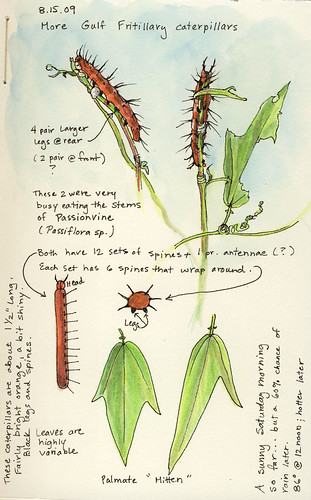
1. Counting
2. Measuring
3. Comparing
4. Finding patterns and relationships

Click here for a PDF document that lists more specific ways to use each one of these categories. I would love to hear your experiences with math and art, and how you use them together. Better yet, share them with us all!