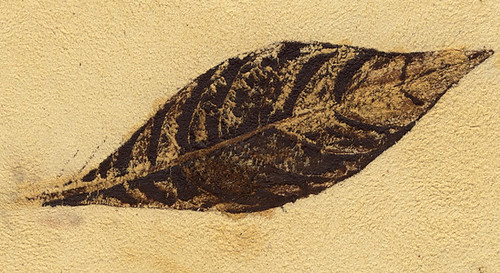
Some time ago, I experimented with making prints directly from the leaves of plants and trees. It was a fun way to play with color and form, to see and connect with nature in a unique way.
I developed a completely new appreciation for the plants I selected; I found myself paying more attention to leaf margins and vein patterns, to textures and shapes.
I pressed the leaves for a day or two beforehand to reduce the moisture content – it also made them flatter and more manageable. Then I gathered a variety of paints and materials and set out to see what would work best!
Here is what worked for me:
Watercolors
1. I used scraps of watercolor paper, both hot- and cold-pressed. Hot-press paper will retain more detail because of its smoothness. I normally like a 90 or 140 lb. paper.
2. Since watercolor dries so fast, I brushed pure gum Arabic on the leaf to increase flow and to extend the drying time.
3. I painted over the Gum Arabic with a deeply pigmented wash, trying for an even coat.
4. I then pressed the leaf gently onto the dry paper, covered it with a paper towel and a piece of light pasteboard, and rolled it gently with a brayer (I used a wallpaper seam roller that I had on hand).
5. I carefully removed the board, paper towel, and leaf, and let the paper dry thoroughly.
6. I added a pale color wash behind some of the printed veins, and used a small rigger brush to enhance veins or outlines. Be gentle so you don’t overly disturb the initial print.
Acrylics
1. I used hot-press watercolor paper, scraps of paint canvas, and suede.
2. A medium slurry of acrylic and water is preferable to heavy impasto paint, especially on paper. I found that a more buttery paint consistency works better with heavily textured materials such as canvas and suede.
3. Follow the same technique as the watercolor printing above, skipping the Gum Arabic part.
4. Because acrylic molecules dry and bond more permanently, you can paint over them much sooner than watercolors (just avoid scrubbing them).
A lot of my experimenting is trial and error, and discovering which types of leaves worked best. I find that printing with the leaf underside yields a stronger vein pattern than using the top of the leaf. I also realized that I could use the leaves themselves to plan out compositions beforehand by placing them on my paper and moving them around.
Be prepared to have a few flops as you learn about materials and techniques. Once you practice a bit and find what works for you, you’ll enjoy success! As for me, what could be more fun than playing with leaves and paint and paper?
Click on the topmost image to view it larger on my Flickr photostream, click here to see several other examples of leaf printing.